
1- The Problem of State and Governance in Africa
Many challenges in Africa are not about people, but about how systems are built. When structures are weak, even good intentions struggle to survive.
A Merit-Based Constitutional Governance Model for African Countries: With This Governance Model, African Nations Can Achieve Stability, Peace, and Long-Term Security!
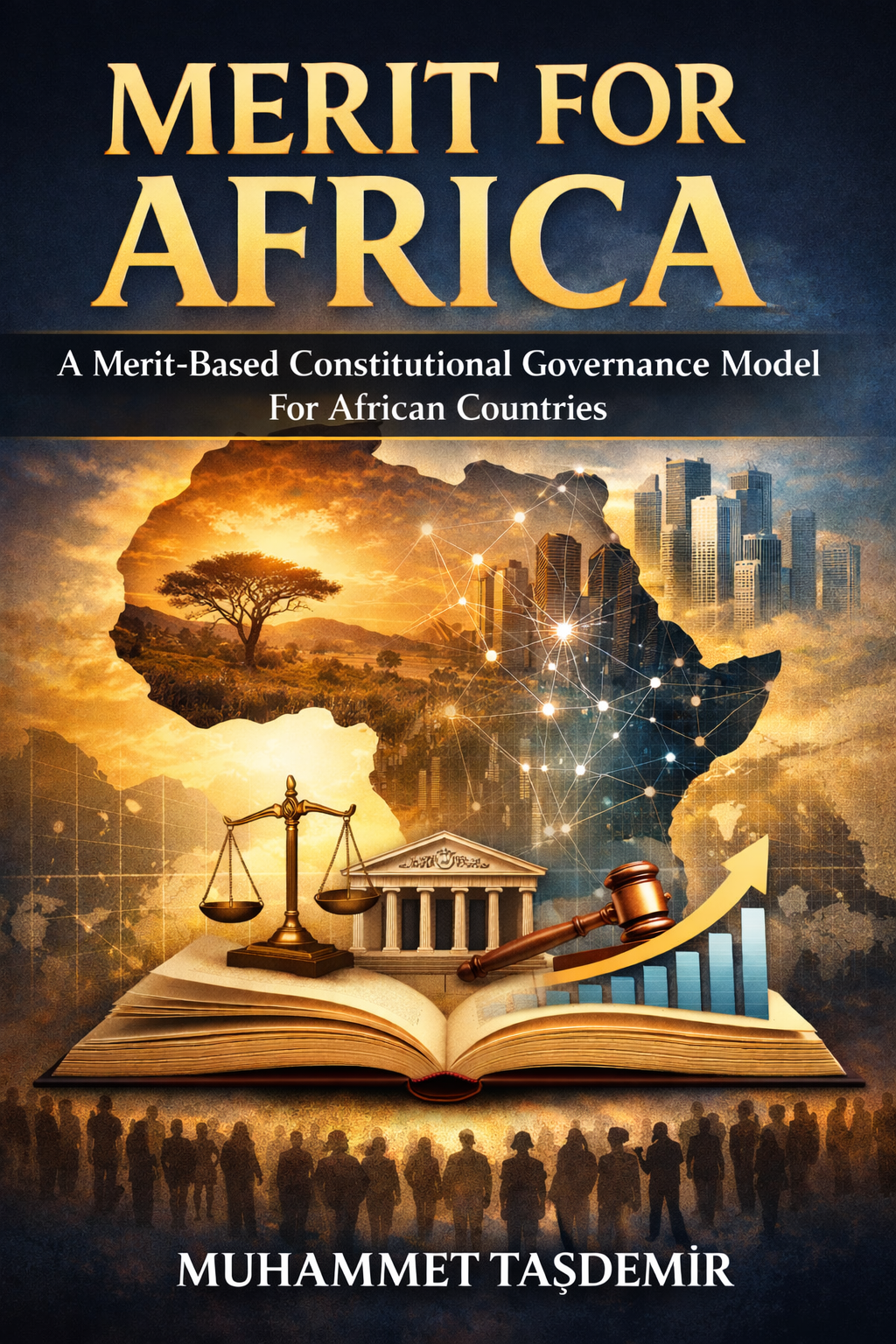

Africa deserves more — more opportunity, more fairness, deeper institutional strength, and a future shaped by its true potential rather than its limitations. Across the continent, immense human capital, cultural richness, and economic promise exist alongside structural challenges that call for thoughtful and sustainable solutions. This book seeks to move beyond familiar narratives and instead focus on what can be built: systems that empower individuals, strengthen institutions, and create environments where merit, accountability, and long-term vision can thrive.
Muhammet Taşdemir is a researcher and author working in the field of sociology. His work focuses primarily on state structures, constitutional design, institutional merit-based systems, and governance models. He believes that the sustainability of modern states depends not only on political change but also on the redesign of institutional architecture.
In his writing, he concentrates on developing accountable and merit-based governance models that limit the concentration of power. In his book “Merit for Africa,” he proposes a merit-based institutional framework for African countries from a constitutional governance perspective.
His academic approach combines historical analysis, comparative politics, and institutional sociology. The primary goal of his work is to design systems that produce greater fairness, rationality, and long-term stability.
The first step toward implementing a merit-based constitutional management model begins with a thorough understanding of the framework itself. Readers are encouraged to engage deeply with the concepts, principles, and institutional logic presented throughout this book. Rather than approaching the model as a collection of isolated ideas, it should be understood as an integrated system designed to reshape governance through institutional balance, merit, and long-term strategic thinking. Careful reading allows policymakers, reformers, and stakeholders to grasp not only what must change, but why change is necessary and how sustainable transformation can be achieved.
At this stage, a realistic evaluation of the existing institutional structures within the country must be conducted. It is essential to analyze how state institutions operate, how transparent and accountable decision-making mechanisms are, and to what extent merit is applied in public administration. The objective is to clearly identify both the strengths of the system and its structural weaknesses. This diagnostic process helps reveal core problems such as concentration of power, institutional gaps, and factors that hinder efficiency in governance. In this way, the reform process can be shaped not by assumptions, but by real institutional data and the actual needs of society.
Following the diagnostic phase, a structured transition framework must be designed. This stage may involve the formation of independent advisory bodies composed of constitutional experts, academics, public administration specialists, and experienced practitioners. The objective is to move reform discussions away from ideological conflict and toward technical, institutional solutions. The transition framework should define reform priorities, institutional restructuring strategies, and the sequence in which changes will be implemented.
Before comprehensive constitutional restructuring takes place, limited but high-impact pilot reforms should be introduced. These may include transparent criteria for public appointments, performance-based evaluation systems, or strengthened independent oversight institutions. Visible and measurable improvements help build public trust and demonstrate that reform is achievable. This phase creates the institutional and societal foundation necessary for deeper structural transformation.
FBased on lessons learned from pilot reforms, the core elements of the merit-based constitutional management model should be formally integrated into the institutional framework. This stage involves constitutional amendments where necessary, the redesign of power-balancing mechanisms, the establishment of independent oversight bodies, and the institutionalization of long-term strategic planning systems. The goal is to ensure that reforms are not temporary political decisions but structurally embedded safeguards that function independently of individuals.
Lasting transformation requires more than structural change; it requires cultural internalization. In this final phase, merit-based principles must become embedded within public administration practices, educational systems, and societal expectations. Continuous performance measurement, transparent reporting, and independent auditing mechanisms help prevent regression. Reform becomes durable when it evolves into institutional culture rather than remaining a political initiative.
Many challenges in Africa are not about people, but about how systems are built. When structures are weak, even good intentions struggle to survive.
Some constitutions look strong on paper but collapse in real life. When rules don’t match reality, trust slowly disappears.
Merit means putting the right people in the right roles for the right reasons. A state built on merit creates fairness and long-term stability..
Power should never sit comfortably in one place. When institutions balance each other, freedom becomes safer.
Natural wealth can be a blessing or a trap. Without good systems, resources divide instead of unite..
Corruption often grows where accountability is weak. It becomes normal when systems quietly allow it.
No country stays the same forever. A living constitution must grow and adjust with society.
Every strong system stands on clear values. Merit, transparency, and balance are the foundation stones.
This model is not abstract theory; it is a practical guide. It explains how ideas can turn into working structures.
This is a vision for a stronger and fairer future. It offers a path where merit shapes leadership and institutions serve the people.
Big ideas need clear steps to become real change. This section explores practical paths and strategies that can turn vision into action.
You can reach me through the channels below to discuss the project, consulting, collaboration, or my book.
Write to me on WhatsApp for quick communication.
Write on WhatsAppFollow me on Instagram for updates, quotes, and content.
Visit InstagramSend an email for more detailed or formal communication.
Send EmailMerit for Africa — Merit-based institutions create sustainable peace and stability. This is how Africa can rise!
Download "Merit For Africa" and Save Africa!